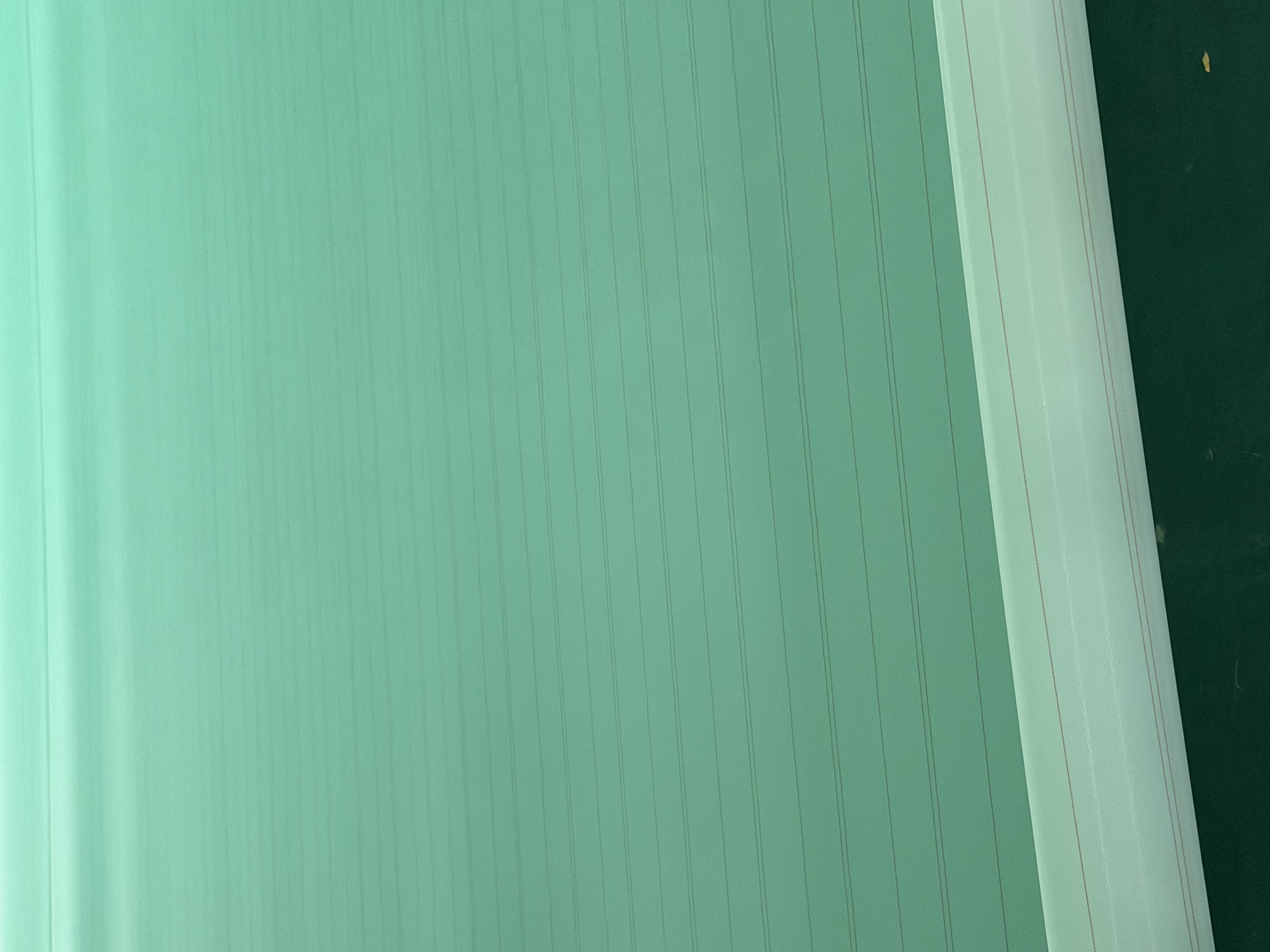
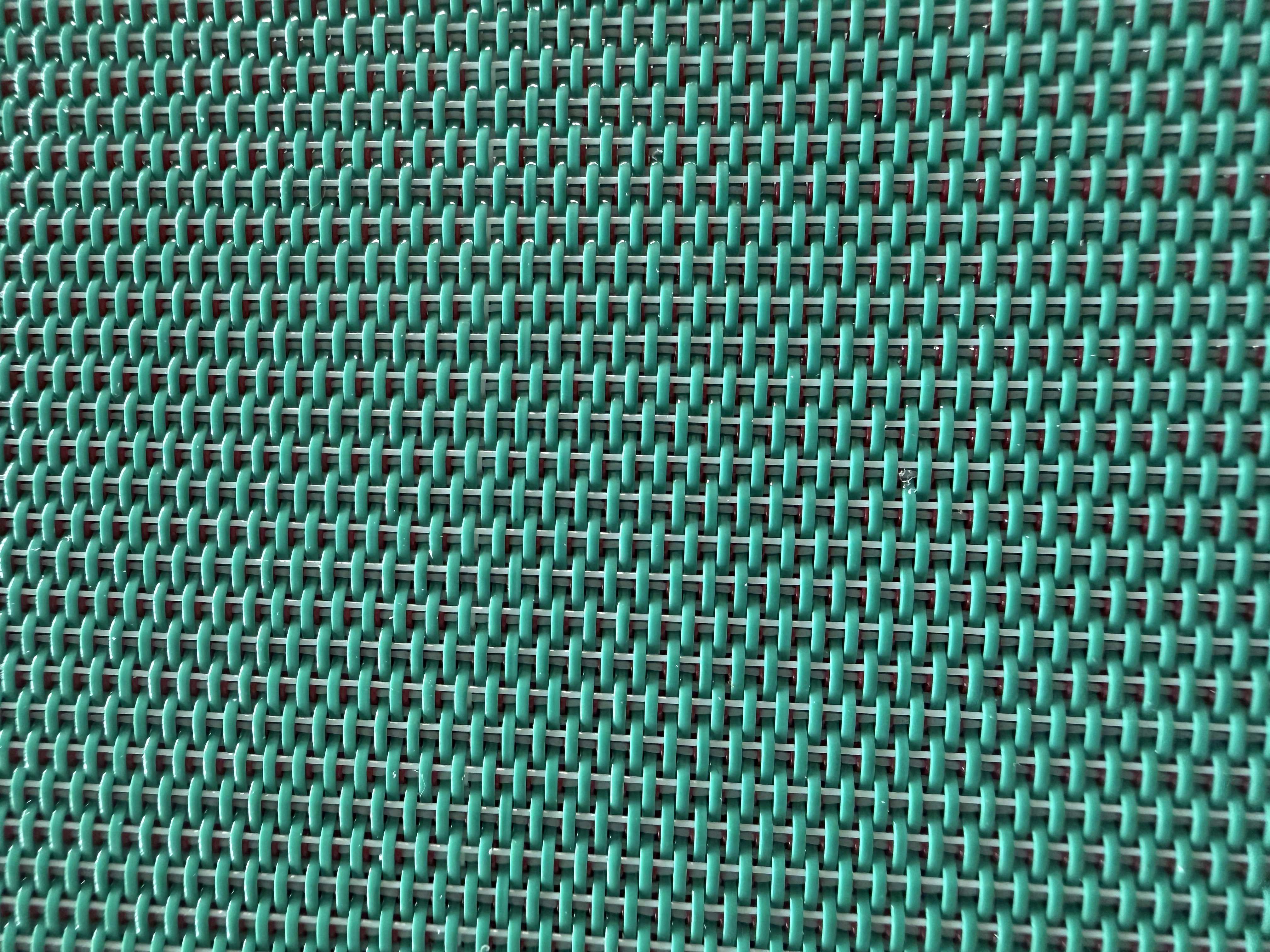
The forming fabric is the core component of the wet section of a paper machine, directly receiving the fiber suspension discharged from the headbox. Its primary tasks are web formation and dewatering.
Core Functions:
Formation and Support: Serves as the carrier base for papermaking fibers, enabling uniform dispersion and interweaving of fibers on the fabric surface to form a wet web.
High-Efficiency Dewatering: Rapidly reduces the moisture content of the paper web through mechanical dewatering on the forming section. A high-performance forming fabric accelerates dewatering, thereby improving the overall efficiency of the production line.
Improving Paper Quality: Premium forming fabrics significantly reduce two-sidedness, enhance surface strength, and improve sheet formation uniformity.
Technical Features:
Modern papermaking predominantly utilizes polyester forming fabrics, which offer advantages such as high abrasion resistance, excellent fatigue strength, acid/alkali resistance, and minimal wire marking. For high-speed paper machines and demanding quality requirements, SSB (Sheet Support Binder) forming fabrics have become the mainstream technology, providing superior fiber support and more stable running performance.
Primary Applications:
Forming fabrics are widely used in the production of various paper and board grades, including cultural paper, printing paper, packaging paper, tissue paper, kraft paper, corrugated medium, and linerboard.
Once the wet web leaves the press section and enters the drying section, the dryer fabric takes over.
Core Functions:
Pressing and Heat Transfer: The dryer fabric presses the wet web tightly against the surface of the drying cylinders, facilitating heat conduction to accelerate moisture evaporation and dry the sheet.
Sheet Smoothing: During the drying process, the tension and pressure applied by the dryer fabric contribute to improved flatness and surface properties of the finished paper.
Technical Features:
Compared with traditional dryer felts or canvas, polyester dryer fabrics offer higher permeability, greater heat transfer efficiency, and significant energy-saving benefits. They exhibit excellent resistance to high temperature, high humidity, and abrasion, with a longer service life. Permeability can be flexibly adjusted according to process requirements to accommodate the drying curves of different paper grades.
Primary Applications:
Dryer fabrics are specifically used in the drying section of paper machines, replacing traditional dryer felts and canvas. They are suitable for producing paperboard, kraft paper, corrugated medium, white board, and various other paper grades.
The differences between forming fabrics and dryer fabrics can be summarized across several key dimensions:
Operating Section
Forming fabrics operate in the wet section of the paper machine, specifically the forming or wire section. Dryer fabrics, on the other hand, operate in the dry section — the drying section of the machine.
Core Task
The primary task of forming fabrics is pulp dewatering and web formation, which involves turning the fiber suspension into a coherent wet sheet. Dryer fabrics are responsible for drying the paper web and smoothing its surface through heat transfer.
Primary Challenges
Forming fabrics must contend with abrasion from fibers and fillers, fiber retention on the fabric surface, and maintaining efficient dewatering performance. Dryer fabrics face challenges related to high temperature and high humidity, efficient heat transfer, and maintaining consistent tension retention throughout the drying process.
Performance Focus
The performance of forming fabrics is centered on sheet support, abrasion resistance, and improving paper formation uniformity. For dryer fabrics, the key performance indicators are permeability, heat resistance, and dimensional stability under thermal stress.
Representative Technology
Common forming fabric technologies include SSB (Sheet Support Binder) structures, triple-layer fabrics, and double-half-layer designs, all engineered to optimize fiber support and dewatering. Dryer fabric technology typically features polyester spiral dryer fabrics and woven dryer fabrics, which are designed to balance permeability with mechanical strength at elevated temperatures.
As hengyuan network, we are dedicated to providing high-performance forming fabric solutions tailored to the needs of modern papermaking. We understand that forming fabrics not only impact wet-end dewatering efficiency but also directly influence machine speed, energy consumption, and final paper quality. Choosing us means choosing lower fabric consumption, more stable machine operation, and superior paper quality.
In future technical articles, we will delve deeper into how to select the most suitable forming fabric type based on paper machine configuration and the specific paper grades being produced. Stay tuned.